
The Glaciers National Park
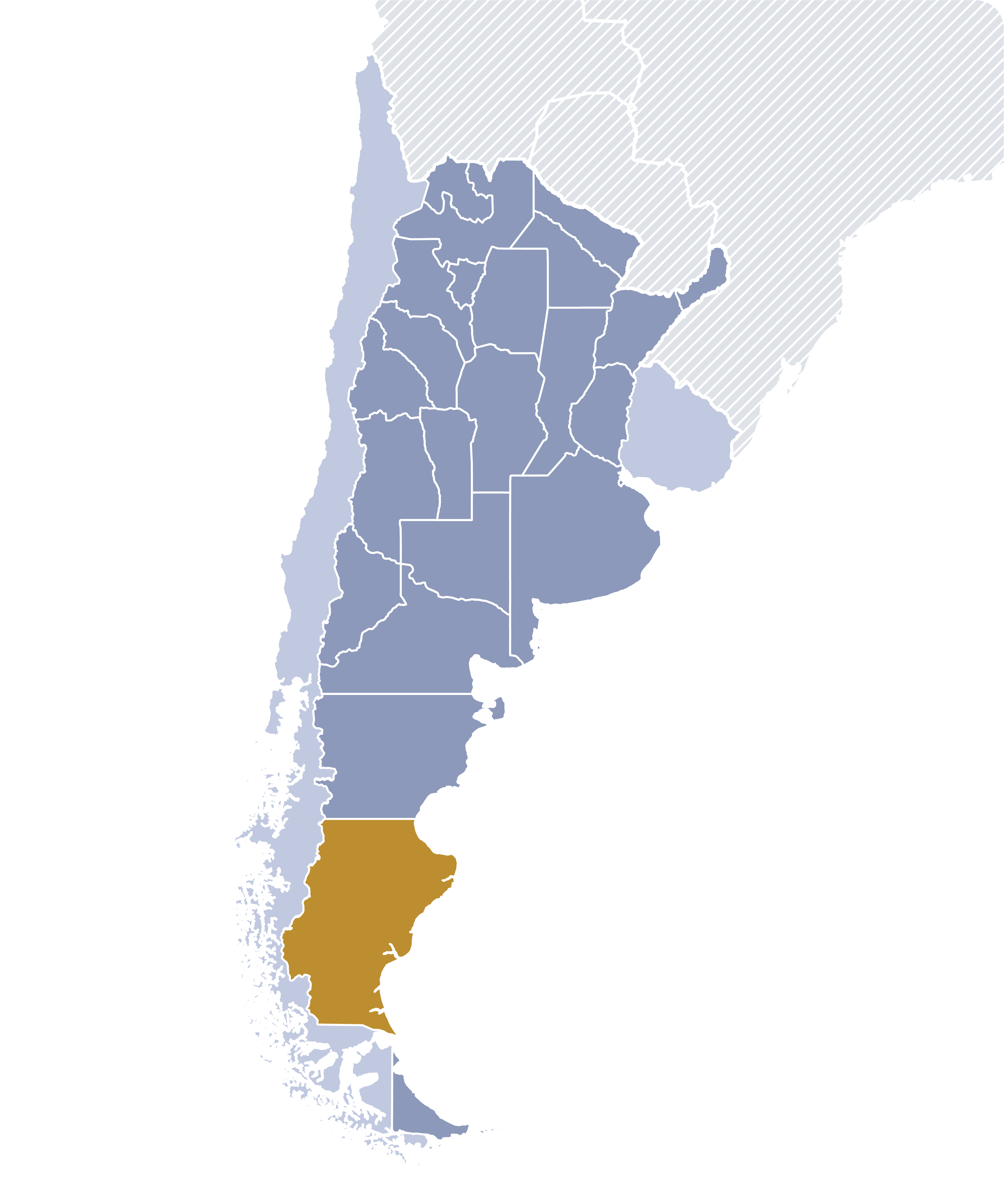
The Glaciers National Park is set amongst the Southern Patagonian Andes. The park is home to some fantastic wildlife such as puma, guanaco (mini-llama), armadillo, south Andean deer and over 100 species of birds including flamingo, black-necked swans and peregrine falcons. The region has become famous for its fantastic hiking and we love to go and check out new routes. One of the most exciting was an adventure honeymoon we organised for an old friend who was keen to do something completely and was up for testing a new route with us. The journey started on horseback, at a ranch with a fabulous view over the indigo waters of Lake San Martin. We rode up through the Patagonian Andean Forest and into the higher mountains where our faithful horses could go no further. We waved them goodbye as our Gaucho guides led them home and we struggled forward on foot climbing over the hills and down to one of the most beautiful lodges in the county situated on the shores of Lake Del Desierto. It perfectly encapsulated our favourite type of trip, a real adventure followed by a chance to sit back and enjoy South America’s awe-inspiring scenery from a lap of luxury.
Where to go & What to do
- Exploring Los Glacieres National Park by boat.
- Hiking around and over the glaciers.
- Kayaking to the face of the most famous glacier, Perito Moreno.
- Climbing the famous Mount FitzRoy.
- A 4×4 road trip in search of the local wildlife.
- Mountain biking or horse riding in the mountains that surround the park.
Travel logistics
- Summers in the park are very pleasant – generally sunny, dry and at times windy. Winters can be cold with the average temperatures of 30 °F/-1°C. The most important weather factor in the park is the wind that picks up force coming up from the Antarctic. In the summer the wind is usually moderate, while in the winter it becomes a major consideration, though at any time of the year it’s a risk. Wind-proof clothing and multiple layers are both recommended. The length of the day changes according to season. In Summer, the sun rises as early as 5:30am and sets at 11pm. In winter, the days are shorter and there is only eight hours of daylight.
- The little airport at El Calafate is a 3.5 hr flight from Buenos Aires, 42 hr by land,.
- We love the Spring and Autumn in the region, though throughout the Summer is a good time to travel, and even in the winter it is possible to visit – it is of course much colder and the activities are limited, though it has a wonderful winter wonderland charm.
- Los Glaciares national park combines well with other Patagonian destinations, there are direct flights to Bariloche in the Argentine Lake District and Ushuaia, Tierra del Fuego province, or you can drive over the Andes into Chile to South America’s most famous National Park, Torres del Paine.
- Another great combination is to do a big loop round taking a 4-day boat trip through the Patagonian Fjords to combine Los Glaciares and Ushuaia in Argentina with Punta Arenas and Torres del Paine in Chile.
Things to keep in mind
- In the Southern end of the park, there are several activities that have age restrictions, we feel they are slightly unfair though there is no way to get around them so it’s important to keep them in mind.
- The park is the largest in Argentina and, to see all of its attractions, it is often not the most practical to lodge in one area. We like to lodge people in the southern end of the park for some nights and then some more nights in the northern end. They are both very distinctive and the more time one can give the area the better.
Example Itineraries
Some examples of our favourite trips that we’ve organised over the years:
What our guests say
Posted onTrustindex verifies that the original source of the review is Google. Argentina was all we hoped for and more! Thank you to Jimena and the MacDermott’s Argentina team for a beautiful and unforgettable trip! Although we entered this journey with little knowledge of South America or Argentina, we were expertly guided by Jimena from the first conversation and over many others. Our trip was tailored to many specifications--private tours, drivers, boutique hotels, restaurant reservations and unique experiences. We felt very cared for and the lines of communication were open for any questions or guidance. We had a fabulous mix of nature and city--from the incredible Buenos Aries, to Bariloche, Salta and the Iguazu Falls. Argentina is a large country that required good planning and navigation to optimize our experience over the 2 weeks we had. Jimena helped us organize an itinerary that kept us on schedule--knowledgeable and fun English-speaking guides who met us at our hotels, local drivers, boats and many planes. Her recommendations gave us experiences we might never have found or tried. We were leery of our private tango lesson and day in Tigre--with Jimena’s encouragement we agreed and these activities became some of our most memorable travel experiences. We were also able to incorporate some much-appreciated free time into our days for wandering or relaxation. We would highly recommend Jimena and the MacDermott’s team to personalize a trip to Argentina. Thank you again!!!!Posted onTrustindex verifies that the original source of the review is Google. 100%SATISFIED I did some research and based upon reviews, selected MacDermott’s. I was contacted by Jimena and she was our »person » for several months. I have zero negative comments. Jimena listened to my requests, made suggestions and we arrived at an itinerary that looked good. It certainly was! She was able to personalize our trip nicely. I appreciate that Jimena has long standing relationships with suppliers, drivers and guides. This meant that everyone we met was professional, knowledgeable and fun. Highly recommend both this company and especially, Jimena.Posted onTrustindex verifies that the original source of the review is Google. MacDermott is the best travel organization we have ever traveled with. We spent two weeks traveling from Buenos Aires to Mendoza and onwards to Salta and Iguazu and returning to BA Perfect choice of boutique hotels, several exquisite wine tasting and paired food Knowledgeable and qualified drivers And a close follow up from their coordinator Jimena All our thanks for a splendid vacationPosted onTrustindex verifies that the original source of the review is Google. We just returned from our two week trip to Chile, planned for my 60th birthday. My boyfriend and I had the most spectacular trip! Hugh and his team put together an amazing itinerary, designed to meet all our requirements for experiences, logistics, uniqueness and our desired activities. From my first call with Hugh, I felt the responsiveness, personalization and high level of service his company provided. I couldn’t have asked for anything more in a travel partner. We had three stops—a winery in the Colchagua Valley, a boutique hotel in the Patagonia Lakes region, and a lodge in Southern Patagonia, near Torres del Paine National Park. The recommendations on lodging were so perfect--each was intimate, with such a high level of service and uniqueness. We loved that they were all inclusive, with meals and excursions included. This allowed us to adjust our plans day-to-day, based upon weather and how we were feeling. Hugh also made arrangements to make sure I had a very special birthday celebration, which was absolutely wonderful.Posted onTrustindex verifies that the original source of the review is Google. Just returned from a FANTASTIC trip to Argentina. Working with Paulo and his team at MacDermott's was excellent -- they were professional, very responsive to our goals and need, and they thought of every detail. We really appreciated their careful listening to our needs and goals for our trip and the itinerary they planned for us, including a special private tango lesson evening. All of the logistics for drivers and domestic Argentinian air travel were handled meticulously, Communications with the team were easy and they always responded promptly. We felt very well cared for during our travels. Would definitely work with MacDermott's again!Posted onTrustindex verifies that the original source of the review is Google. Paulo and team did a fantastic job of planning Matt's trip - 39 pages of explicit detail for three weeks! When there were minor glitches the team responded immediately to the WhatsApp group chat and resolved any concern. I would highly recommend this tour company.Posted onTrustindex verifies that the original source of the review is Google. Paulo was an amazing representative! He was very helpful in setting up excursions, lodging and transfers. He was extremely responsive and always considered our wants and needs. We loved our time in El Chalten, El Calafate and Puerto Natales!Posted onTrustindex verifies that the original source of the review is Google. Hugh and colleagues planned and delivered a tailored itinerary for us from Santiago to Puerto Montt and down the Carretera Austral via Chiloe Island. It was a great trip. Arrangements in Chile worked well. A WhatsApp link ensured communication if and as needed (which it wasn't). Our driver cum guide, Hans, was terrific. And the various activities along the way were the kinds of experiences we hoped for. It felt like - and was - a collaborative undertaking based on taking time to understand our wishes, then following through. So, a strong recommendation for MacDermott's (as well as for Patagonia).Posted onTrustindex verifies that the original source of the review is Google. I am so pleased to review our personalized trip planned by Paulo. We enjoyed the vacation of a lifetime. In every destination, we stayed at unique and beautiful boutique hotels. They truly reflected the culture of the places we were visiting and the service was so friendly. The guides and the tours way exceeded our expectations. Throughout our journey we really got a feel for the history and the culture of the areas that we never would have experienced on our own. Like the night of Tango in Buenos Aires with with Gustavo and the market tour in Santiago with Eduardo. Experiencing Iguazu from both the Argentinian and Brazilian sides was so much fun with Cato. The boat right on the Parana and bandoneon concert by Luis moved me to tears. Our treks and boat rides and asado experiences with Facundo and Nico were so much fun. They made us feel like family. Every detail of this vacation reflected Paulo's love of his culture and care and concern for his patron's happiness. Gracias por todo.Posted onTrustindex verifies that the original source of the review is Google. November 22, 2024 I booked a trip to Buenos Aires and Argentine Patagonia through MacDermott's Travel on February 17, 2024. The tour was scheduled for September 13th through the 21st. I made it to Buenos Aires; however, I wasn't able to take the tour due to illness. I became violently ill and unable to walk. I didn't learn my true diagnosis in Buenos Aires but upon my return home to Las Vegas I had to be hospitalized for severe dehydration and complications stemming from an urinary tract infection. I also had rhabdomyolysis,. I learned that my condition was life threatening. Given this, I had to cancel the tour. I ended up staying at two different hotels for the length of my stay. All I saw of Buenos Aires was the street outside my hotel window. I was alone in a foreign country without the benefit of knowing how to speak and understand fluent Spanish. This exacerbated my condition. If it wasn't for Hugh MacDermott and his staff, I honestly do not know how I would have managed. Hugh sacrificed his time at work for days by helping me get to a hospital and to a pharmacy. He arranged for a doctor to come see me in my hotel room and he checked on me daily. Hugh arranged arranged for my travel home and made sure I had a wheelchair at every airport I had to deplane. Jimena, my travel agent, desgned a private tour for me to see everything I wanted to see. Ana, my gracious guide, took me to and from the airport. She interpreted for me with staff there and obtained a wheelchair for me to get me to my gate. During my initial drive to Buenos Aires she gave me an excellent history of Argentina and Buenos Aires in general. Additional staff members, Marianna, Paulo and Adriano, expertly coordinated my stay which I am grateful for. In the end, Hugh assisted me by writing a letter of explanation to Faye, my travel insurance agency, and he supplied them with the necessary documents necessary for me to claim reimbursement for the trip. Though my trip did not work out as planned, MacDermotts went out of their way to make my stay as stress-free as possible. They provided me with a heart rendering experience that is not always the case in the travel industry. Contact them when you plan to go to Argentia for a vacation. Denise Roth